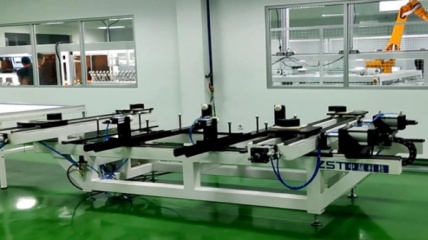
In solar manufacturing, production efficiency is never defined by speed alone. A fast line that creates inconsistent profiles, frequent stoppages, or excessive material waste will eventually raise costs instead of lowering them. That is why more manufacturers are focusing on integrated equipment that can deliver stable output, repeatable quality, and streamlined workflow across the full frame-making process. A Solar Panel Frame Machine, especially in the form of a roll forming system designed for PV frame production, plays a central role in that transition. It helps producers improve throughput, maintain dimensional consistency, reduce manual intervention, and support large-scale solar panel manufacturing with greater control. In practical terms, this means the frame line becomes more than a forming station. It becomes a productivity engine connected to upstream material handling and downstream assembly requirements. Industry sources on roll forming and solar frame production consistently point to automation, uniformity, inline processing, and reduced labor dependence as key reasons these systems improve manufacturing performance.
Why frame production has become a bottleneck in modern PV manufacturing
As global solar demand has expanded, manufacturers have had to raise output while protecting product quality. Frames may seem like only one component of the finished module, but they directly affect assembly fit, structural stability, corrosion performance, and installation reliability. When frame production is inconsistent, the problems can spread across the whole module line. Poor dimensional control may lead to assembly mismatch. Slow changeovers may reduce daily capacity. Excessive manual handling may increase labor cost and error rates. For these reasons, frame production is no longer treated as a secondary operation. It is now a strategic stage in PV manufacturing.
Roll forming machines are particularly valuable here because they are designed for continuous, repeatable profile production. General roll forming sources note that this process is highly suitable for high-volume manufacturing, allowing large quantities of consistent parts to be produced more efficiently than many stop-start forming alternatives. That broader manufacturing advantage translates well into solar frame applications, where profile uniformity and long-run productivity matter every day.
Continuous forming supports higher line speed
One of the most direct ways a solar panel frame roll forming machine boosts efficiency is through continuous production. Unlike processes that rely on repeated single-part operations, roll forming moves material through successive stations that gradually shape the profile. This setup reduces interruption and supports stable throughput. Technical sources on roll forming describe production speeds ranging from 10 to over 300 meters per minute depending on profile complexity, material, and line configuration. That wide range shows why roll forming is widely associated with high-output manufacturing environments.
In solar frame manufacturing, this matters because a well-configured line can keep frame sections moving through feeding, forming, punching, and cutting with minimal downtime between parts. The result is not simply more pieces per shift. It is a smoother production rhythm that allows planning, staffing, and downstream handling to work more predictably. When a plant is targeting volume growth, this continuity becomes a major advantage.
Better dimensional consistency reduces rework
Efficiency is often lost in places that do not appear on a speed chart. Rework, rejection, fitting problems, and assembly delays can quietly consume time and profit. Roll forming helps address this by producing the same profile repeatedly across long production runs. Several industry sources emphasize that roll forming supports greater uniformity and consistency in one run, which is especially important when components must meet tight dimensional expectations.
For solar panel frames, dimensional consistency matters at multiple levels:
· profile geometry must stay within tolerance
· cut length must match assembly requirements
· hole positions and punched features must align correctly
· corner assembly and downstream fitting must remain repeatable
When the frame profile stays consistent, the rest of module assembly becomes easier to control. Fewer mismatched parts means fewer operator corrections, fewer delays, and lower scrap rates. In a plant producing high volumes every day, even a small reduction in rework can create a meaningful improvement in total output.
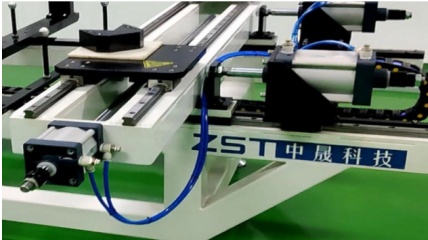
Inline punching and cutting save time
A major reason roll forming systems improve production efficiency is that they can incorporate multiple operations within a single line. Industry sources specifically note the advantage of inline punching as part of efficient roll forming workflows. In solar frame production, this is particularly useful because manufacturers often need features such as mounting holes, drainage holes, grounding marks, or connection points integrated into the process rather than handled separately.
Some solar frame production lines are described as combining automatic feeding, hole punching, corner-related operations, and cutting within the same system. This reduces the need to move semi-finished parts between multiple machines or workstations. Less transfer means less handling time, lower labor demand, and fewer chances for positional error.
Why integration matters
When each production step is isolated, efficiency suffers in several ways. Material waits between processes. Operators spend time repositioning parts. Quality risk increases whenever a component is re-handled. By integrating forming and secondary operations, a solar panel frame machine compresses the process into a more controlled production path.
The gain is not only speed
The gain is also stability. If punching, forming, and cutting are synchronized, the output is easier to forecast and quality becomes easier to manage. That is one reason integrated lines are often preferred for larger PV manufacturing environments.
Automation lowers labor intensity and handling delays
Automation is another major driver of efficiency. Some solar frame production equipment is specifically promoted for automatic loading, unloading, feeding, drilling, or precision cutting. These functions reduce manual intervention and help maintain line rhythm over long production periods.
In practical manufacturing terms, automation creates value in several ways:
Efficiency Factor | Manual or Semi-Manual Process | Automated Solar Panel Frame Machine |
Material feeding | More labor-dependent | More stable and continuous |
Profile consistency | More operator variation | More repeatable output |
Secondary operations | Often separate and slower | Can be inline and synchronized |
Cycle time | Higher variation | Better predictability |
Rework risk | Higher due to handling | Lower with integrated flow |
Scaling capacity | Requires more manpower | Easier to expand output |
This comparison helps explain why plants aiming for larger production volumes often invest in automated frame lines rather than relying on fragmented equipment layouts. Automation does not eliminate the need for skilled oversight, but it significantly reduces non-value-added manual activity.
Material utilization can improve with roll forming
Production efficiency is also connected to material usage. Waste affects both cost and throughput. General roll forming sources note that the process can reduce waste by minimizing trim scrap and eliminating certain inefficiencies associated with other methods.
For solar frame manufacturers, better material utilization can come from:
· more controlled profile shaping
· fewer rejected lengths caused by dimensional error
· integrated processing that reduces mishandling
· better repeatability during long production runs
If the plant is producing aluminum solar frames or similar standardized profiles at scale, even modest gains in yield can have a significant financial effect. Better material efficiency supports both productivity and margin.
Conclusion
As the solar industry continues to scale, manufacturers need equipment that can do more than produce parts. They need systems that help stabilize workflow, reduce waste, lower labor intensity, and support consistent quality at higher volumes. A Solar Panel Frame Machine built around roll forming technology answers that need by combining continuous processing, dimensional consistency, integrated operations, and scalable output. For frame manufacturers and PV module producers alike, the result is a production line that is easier to control and better suited to long-term growth.
From our perspective at Qinhuangdao ZENITHSOLAR Technological Co., Ltd., the most effective way to improve frame manufacturing is to focus on the full production picture rather than machine speed alone. Reliable feeding, precise forming, synchronized punching and cutting, and stable downstream compatibility all matter. When companies evaluate equipment through that broader lens, a well-designed solar panel frame roll forming system can offer clear operational value. Readers who want to explore suitable frame production solutions, compare line configurations, or better understand how to improve PV frame efficiency can learn more from Qinhuangdao ZENITHSOLAR Technological Co., Ltd. or contact the company for further discussion.
FAQ
1. What does a Solar Panel Frame Machine do?
A Solar Panel Frame Machine is used to form and process frame components for solar modules. Depending on the line design, it may include feeding, roll forming, punching, cutting, and other automated steps that help produce consistent PV frame profiles.
2. Why is roll forming suitable for solar panel frame production?
Roll forming is well suited to solar frame manufacturing because it supports continuous production, repeatable profile accuracy, and efficient high-volume output. It also allows some secondary operations to be integrated into the line.
3. Can a solar panel frame roll forming machine reduce labor costs?
It often can. Automation in feeding, handling, punching, and cutting reduces manual intervention and can improve production stability, which helps lower labor intensity and handling delays.
4. What should buyers check before choosing a PV frame production line?
They should review profile accuracy, automation level, integrated processing capability, changeover flexibility, maintenance support, and how well the machine fits their actual production workflow and output targets.


