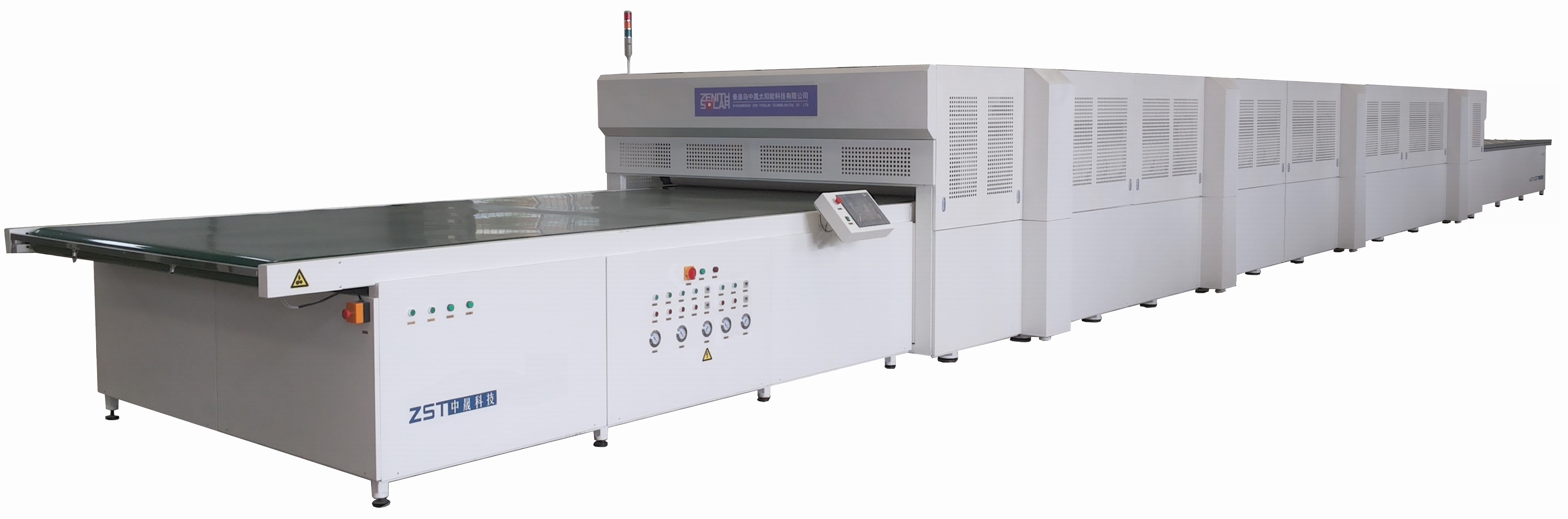
Laminators are crucial in the production of solar panels, as they encapsulate the solar cells between layers of protective material under high heat and pressure, ensuring durability and optimal performance. The choice of laminator significantly impacts production efficiency, cost, and panel quality. For high-volume production, selecting the right laminator is even more critical. Single-chamber laminators, with a simpler design, are often used in lower-volume settings due to their cost-effectiveness, while double-chamber laminators, which feature two chambers for simultaneous processing, are better suited for large-scale operations. Double-chamber models offer higher throughput and improved efficiency, making them ideal for manufacturers seeking to meet the demands of high-volume production. This article will explore the differences between single-chamber and double-chamber laminators, helping manufacturers decide which is best for their needs.
Single-Chamber Laminators: Features and Benefits
1.Explanation of Single-Chamber Laminators and Their Operating Mechanism
Single-chamber laminators are designed with one chamber that houses the solar panels during the lamination process. The panels are placed inside, and the laminator applies heat and pressure to encapsulate the solar cells between layers of protective material. The laminator uses a single chamber to complete the entire process for each batch of panels, making it simpler and more straightforward in terms of design and operation.
2.Benefits for Low to Medium-Volume Production
Single-chamber laminators are ideal for low to medium-volume production as they are cost-effective and require less space compared to their double-chamber counterparts. Their relatively simple design makes them easier to operate and maintain, which is beneficial for smaller production lines or manufacturers with varying production needs. For manufacturers that don’t require extremely high throughput, single-chamber laminators provide a reliable and affordable solution.
3.Cost-Effectiveness and Simpler Design
One of the key advantages of single-chamber laminators is their affordability. They are generally less expensive than double-chamber laminators due to their simpler design and reduced complexity. With fewer components and less automation, they also tend to have lower maintenance costs, making them an attractive option for businesses looking to keep initial investments and operational costs down.
Double-Chamber Laminators: Features and Benefits
1.Overview of Double-Chamber Laminators and Their Dual-Chamber Design
Double-chamber laminators are equipped with two separate chambers, allowing two sets of solar panels to be processed simultaneously. The design allows one chamber to be in the heating and bonding phase while the other chamber prepares for the next set of panels. This parallel processing capability significantly increases efficiency, making it ideal for high-volume production.
2.Advantages for High-Volume Production, Including Faster Throughput and Efficiency
Double-chamber laminators excel in high-volume production environments where speed and efficiency are paramount. With their ability to laminate two sets of panels at once, they can reduce overall production times and increase throughput, allowing manufacturers to meet higher production targets. This increased efficiency helps lower the cost per unit produced and ensures that high-demand orders can be completed more quickly.
3.Higher Initial Cost but Improved Performance for Large-Scale Operations
While double-chamber laminators come with a higher initial investment due to their advanced design and capabilities, they offer improved performance that justifies the cost for large-scale operations. The faster throughput, higher capacity, and increased efficiency allow manufacturers to benefit from economies of scale, ultimately improving long-term profitability. Double-chamber laminators are particularly well-suited for factories that require continuous, high-speed production to meet the demands of large markets.
Comparison of Performance: Single-Chamber vs. Double-Chamber
1.Key Performance Factors: Speed, Panel Quality, and Efficiency
Speed: Double-chamber laminators are faster due to their ability to process two sets of panels at the same time, reducing production time per batch. Single-chamber laminators, on the other hand, process one set of panels at a time, which may result in longer production cycles, especially for high-volume needs.
Panel Quality: Both types of laminators are capable of producing high-quality solar panels. However, the precision and consistency in temperature and pressure control in both single and double-chamber laminators are critical to achieving the desired panel performance and longevity. In high-volume settings, double-chamber laminators are typically better equipped to maintain consistent quality across larger production runs.
Efficiency: Double-chamber laminators are more efficient in terms of throughput and overall production time, allowing manufacturers to increase their output without compromising on quality. Single-chamber laminators, while effective, may not match the speed or efficiency of double-chamber models in high-volume environments.
2.How Each Type Impacts Production Times, Cost per Unit, and Energy Use
Production Times: Double-chamber laminators, with their ability to process two panels simultaneously, significantly reduce production time, allowing for higher volumes and faster turnaround. Single-chamber laminators, processing one batch at a time, take longer to produce the same number of panels, which may increase overall production times.
Cost per Unit: While single-chamber laminators are less expensive to purchase and maintain, double-chamber laminators lower the cost per unit in high-volume settings. Their ability to process more panels in less time increases efficiency and reduces labor costs, thus lowering the overall cost per unit in mass production.
Energy Use: Double-chamber laminators tend to consume more energy due to their larger size, dual chambers, and higher processing speeds. However, their higher throughput can offset the energy costs in the long run, especially when compared to the energy use of multiple single-chamber units required to meet similar production goals. Single-chamber laminators, being smaller and simpler, consume less energy but are less efficient in high-volume production settings.
Cost Considerations for High-Volume Production
1.Initial Investment vs. Long-Term Operational Costs
Initial Investment: Double-chamber laminators generally require a higher upfront investment due to their more complex design and additional processing capabilities. Single-chamber laminators, in contrast, have a lower initial cost, making them more accessible for businesses with limited budgets or those just starting in solar panel production.
Long-Term Operational Costs: Over time, the operational costs of double-chamber laminators may be higher, primarily due to their increased energy consumption and maintenance needs. However, their ability to increase production speed and reduce labor costs can lead to significant cost savings in the long run. Single-chamber laminators, while more affordable initially, may result in higher operational costs in high-volume settings due to slower production times and potentially higher labor requirements.
2.ROI Analysis for Both Single-Chamber and Double-Chamber Laminators
Single-Chamber Laminators: The return on investment (ROI) for single-chamber laminators is often realized in smaller-scale operations with moderate production demands. The lower initial investment and reduced energy use can make them a cost-effective choice for manufacturers with limited production volume. However, for businesses looking to scale up or meet high production targets, the ROI may be slower as the limited speed and efficiency can hinder long-term growth.
Double-Chamber Laminators: The ROI for double-chamber laminators is more favorable in high-volume production environments where speed and efficiency are critical. While the initial investment is higher, the increased throughput, reduced labor costs, and lower cost per unit typically lead to faster ROI in large-scale operations. Over time, the improved performance and reduced production costs make double-chamber laminators a more profitable option for manufacturers aiming to scale their operations and meet high demand.
Which Laminator is Right for Your Production Needs?
1.Guidelines for Choosing the Right Laminator Based on Factory Size and Production Volume
For small to medium-sized factories with moderate production demands, a single-chamber laminator is cost-effective and efficient. It suits lower production volumes, providing a simpler and more affordable option. However, larger factories or those aiming for higher production should opt for a double-chamber laminator. With its ability to process multiple panels simultaneously, it offers faster throughput and is ideal for high-volume production.
2.Factors to Consider: Energy Efficiency, Throughput, Cost, and Maintenance
Energy Efficiency:
Single-chamber laminators use less energy, making them more economical for smaller operations. Double-chamber laminators consume more energy but provide higher efficiency, justifying the energy costs in high-volume settings.
Throughput:
Double-chamber laminators process two sets of panels at once, increasing throughput and reducing production time. Single-chamber models are slower, better suited for lower-volume needs.
Cost:
Single-chamber laminators have a lower initial cost and fewer operational expenses, making them ideal for small-scale production. Double-chamber laminators, though more expensive upfront, lower the cost per unit in high-volume production.
Maintenance:
Single-chamber laminators are easier and cheaper to maintain due to their simpler design. Double-chamber laminators require more maintenance but offer better performance in large-scale operations, ultimately reducing costs in high-volume production.
FAQ
1.What is the main difference between a single-chamber and a double-chamber laminator?
The main difference is that a double-chamber laminator processes two sets of panels simultaneously, improving throughput and efficiency, while a single-chamber laminator processes one set at a time.
2.Which laminator is more cost-effective for small to medium-scale production?
Single-chamber laminators are more cost-effective for small to medium-scale production due to their lower initial investment, simpler design, and reduced operational costs.
3.How do double-chamber laminators improve efficiency in high-volume production?
Double-chamber laminators increase efficiency by processing two sets of panels at once, reducing production time and boosting throughput, which is essential for high-volume operations.
4.What are the key factors to consider when choosing a laminator for large-scale operations?
For large-scale operations, consider factors like throughput, energy efficiency, cost per unit, maintenance requirements, and the ability to meet high production demands efficiently. Double-chamber laminators are typically the best choice for such environments.
Conclusion
In summary, the choice between a single-chamber and double-chamber laminator depends largely on your production needs. Single-chamber laminators are cost-effective, simpler to maintain, and well-suited for small to medium-scale production, offering a good balance of affordability and performance. On the other hand, double-chamber laminators excel in high-volume production environments by significantly increasing throughput, reducing production times, and improving efficiency, making them ideal for large-scale operations despite the higher initial investment. By carefully considering factors such as production volume, energy efficiency, throughput, cost, and maintenance, manufacturers can make a well-informed decision that ensures optimal performance and long-term profitability based on their specific requirements.


