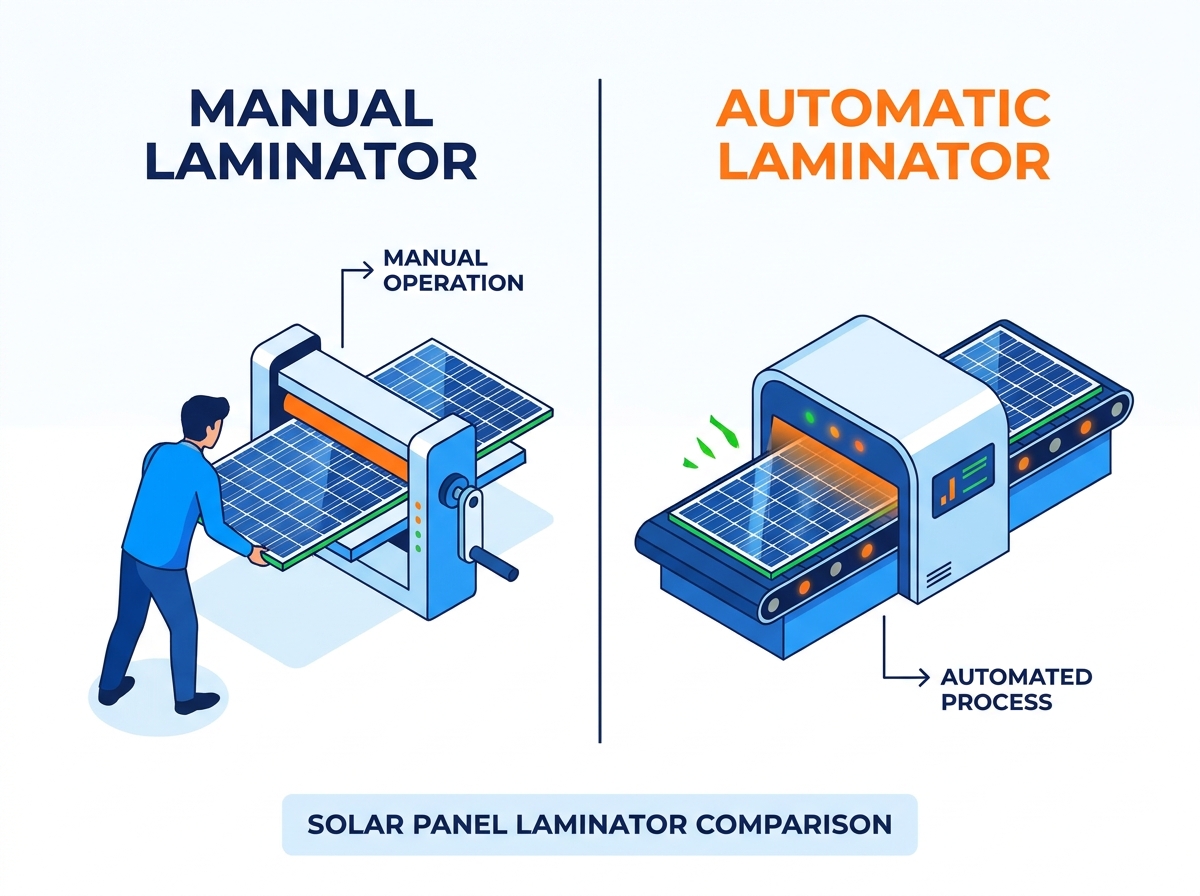
Scaling production forces facility managers and print shop owners into a tight corner. Which finishing equipment protects your products best without destroying your capital budget? Manual machines choke when faced with high volumes. Automated lines demand steep upfront cash. Let us break down the operational mechanics dividing these two technologies. This guide will help you pinpoint the exact equipment matching your production targets.
Key Takeaways
Manual Laminators: Best suited for low-volume or custom projects. They require constant operator supervision and offer a lower initial investment. However, they incur much higher long-term labor costs due to their hands-on nature.
Automated Systems: Engineered for high-speed commercial production. They feature automated feeding, cutting, and precise temperature control. This significantly reduces labor dependencies while ensuring strict quality standards.
Industrial Precision: For heavy-duty manufacturing environments, fully automated systems are non-negotiable. They provide the flawless vacuum-sealed precision required for industrial compliance.
Return on Investment: While carrying a higher upfront capital expenditure, their operational speed and drastic reduction in manual labor offer a much faster financial return for growing businesses.
Understanding the Basics: Manual vs. Automatic Laminating Machines
To make an informed equipment investment, facility managers must grasp the fundamental mechanical differences distinguishing hand-fed systems from automated ones. Both serve the primary function of applying a protective film to a substrate. Yet, their underlying design philosophies cater to entirely different production scales.
What is a Manual Laminator?
A manual laminator serves as a traditional piece of finishing equipment where the operator controls nearly every step. The technician must physically feed the material into the nip point, adjust the roller tension by hand, and constantly monitor analog temperature gauges. Often, they must manually trim the finished product as it exits the rollers using a hand cutter. The entire workflow remains highly tactile. Consequently, the output quality relies heavily on the operator's physical skill, attention to detail, and daily stamina. Because human intervention is required continuously, output capacity hits a hard ceiling very quickly.
What is an Automatic Laminating Machine?
Representing a massive technological leap, an Automatic Laminating Machine is engineered specifically to eliminate human bottlenecks. This equipment functions as a fully integrated system. It comes equipped with automated sheet feeders, digital temperature controls, pneumatic pressure regulators, and inline separation mechanisms. Once an operator programs the job parameters into the digital interface and loads the raw materials, the machine handles the workflow autonomously. By streamlining the encapsulation process, these systems allow operators to step away and manage other value-added tasks on the factory floor.
Recent manufacturing sector analyses reveal a sharp global pivot toward smart automation. Driven by chronic labor shortages and shrinking delivery windows, facilities are rapidly phasing out legacy hand-fed models. Market intelligence indicates that the adoption rate of fully integrated finishing systems is accelerating. Industrial operators are prioritizing equipment that offsets rising hourly wages while eliminating material waste. This shift appears especially pronounced in high-stakes sectors like renewable energy, where microscopic precision dictates long-term product viability.
How Does a Manual Laminator Work?
Manual laminators remain the foundational tools of the print finishing and packaging industry. While they lack advanced robotics and smart sensors, their mechanical simplicity offers distinct advantages for specific low-volume environments.
The Operational Process
Operating a manual device is a labor-intensive ritual. An operator meticulously threads the lamination film through a series of heated and cold rollers. They must feel for the correct tension to avoid snapping the web. Once prepped, the technician carefully aligns the substrate on the feed table before pushing it into the rollers. During the run, the operator must constantly monitor the speed and alignment to prevent the material from skewing. Finally, as the continuous web of laminated material exits the rear, the operator uses a hand slitter to separate the individual sheets. This manual separation step often slows down the entire production line.
Advantages of Manual Lamination
Lower Upfront Capital Investment: Mechanically simpler designs make these machines significantly more affordable to purchase and install. They remain highly accessible for startups and small corporate offices.
Smaller Operational Footprint: Without the need for large automated feeding tables and inline stackers, manual models take up minimal floor space.
Flexibility for Custom Jobs: Because the operator controls the feed rate manually, these machines adapt easily to unique one-off projects or oddly shaped items that might jam an automated friction feeder.
Disadvantages and Limitations
Slow Production Speeds: Output is strictly bottlenecked by how fast a human can accurately feed and cut the material without suffering fatigue.
High Risk of Human Error: Manual tension and alignment adjustments inevitably lead to inconsistencies. Operator fatigue often results in costly defects like bubbles, wrinkles, or skewed lamination.
Labor-Intensive Operations: Running a manual machine demands the undivided attention of a dedicated operator. This makes the process fundamentally unscalable for large commercial orders.
The Power of an Automated System
When production volumes reach a critical threshold, relying on manual labor rapidly becomes financially unsustainable. Upgrading to automated equipment transforms lamination from a persistent production bottleneck into a high-speed streamlined operation.
Advanced Features and Technology
Modern automated systems utilize sophisticated components designed for relentless continuous operation. They deploy pneumatic or hydraulic pressure systems that apply uniform force across the rollers, completely eliminating uneven pressure spots. Take a modern industrial Automatic Laminating Machine for instance. These high-end units feature intelligent programmable logic controllers and precise temperature regulation. Such components maintain thermal uniformity within a strict margin of plus or minus 1.5 degrees Celsius across the entire heating plate. Advanced suction feeders pull individual sheets at precise micro-second intervals, while optical sensors track the gaps. At the exit stage, flying knife cutters automatically trim the film, and inline joggers neatly stack the finished products.
Advantages of Going Automatic
Massive Increase in Production Speed: Advanced feeders and inline cutters allow these machines to process thousands of sheets per hour. They vastly outperform their manual counterparts.
Flawless Consistent Quality: Digital sensors continuously monitor and adjust temperature and pressure in real-time. This eliminates human guesswork, ensuring the first sheet looks exactly like the ten-thousandth sheet.
Significant Reduction in Labor Costs: Because the machine runs autonomously after the initial setup, a single technician can oversee multiple lines simultaneously.
Potential Drawbacks
Higher Initial Purchase Price: The integration of robotics, optical sensors, and digital interfaces requires a substantially larger upfront capital expenditure.
Space and Maintenance Requirements: Automated systems demand a much larger physical footprint. Furthermore, their complex moving parts require scheduled maintenance by trained technicians to prevent unexpected downtime.
Core Differences: A Side-by-Side Comparison
To facilitate a clear decision-making process, facility managers must look beyond the initial purchase price. You must evaluate the core differences between these two technologies across three primary business metrics: speed, quality control, and operational costs.
Speed and Efficiency
The most glaring difference lies in output rates. A manual machine might process a few dozen sheets per minute. However, this pace is constantly interrupted by the operator needing to align the next batch or manually slice the output. In contrast, automated machines eliminate the feeding bottleneck entirely. They operate continuously at maximum roller speeds. This translates to exponentially higher daily throughput and the ability to take on massive commercial runs without breaking a sweat.
Quality Control and Precision
Manual operation relies heavily on visual checks and physical adjustments. If the rollers run slightly too cold or the tension is unbalanced, an entire batch can be ruined before the operator even notices the flaw. Automated systems feature closed-loop feedback mechanisms. Sensitive thermocouples and pressure sensors instantly detect micro-fluctuations and adjust the machine's parameters on the fly. This systematic precision prevents common lamination defects entirely.
Labor and Operational Costs
Choosing between these machines represents a fundamental shift in financial strategy. Manual laminators involve low fixed costs but exceptionally high variable costs due to expensive hourly labor and material waste. Conversely, purchasing an Automatic Laminating Machine requires high fixed costs but offers incredibly low variable costs. Labor is minimized, and material waste is virtually eliminated through sensor-driven automation.
Feature / Metric
Manual Laminator
Automatic Laminating Machine
Feeding Mechanism
Hand-fed by operator
Automated suction or friction feeder
Production Speed
Low, bottlenecked by human speed
High, processing thousands of units per hour
Quality Consistency
Variable, highly prone to human error
Highly consistent, tightly sensor-regulated
Labor Requirement
Requires 100% dedicated operator time
Minimal, needing only setup and monitoring
Primary Cost Driver
High ongoing variable labor costs
High initial fixed equipment costs
Industrial Applications: The Role of the Solar Panel Laminator
While commercial print finishing highlights basic operational differences, heavy industrial manufacturing demonstrates why automation is an absolute necessity. The renewable energy sector provides the perfect case study for this technological leap.
Why Solar Manufacturing Requires Specialized Lamination
In the production of photovoltaic modules, lamination acts as a critical structural process rather than a mere aesthetic touch. Solar cells remain highly fragile. They are extremely susceptible to environmental degradation from moisture, ultraviolet radiation, and temperature swings. Manufacturers must perfectly encapsulate them between layers of Ethylene Vinyl Acetate film, a tempered glass front, and a protective backsheet. This specialized lamination process must completely extract all air to prevent moisture ingress. Any micro-bubbles, uneven heating, or inadequate pressure will inevitably lead to delamination. Such defects drastically reduce the solar panel's efficiency and lifespan.
Manual vs. Automatic in Solar Production
Given the severe financial consequences of encapsulation defects, manual lamination is practically obsolete in modern solar manufacturing. The extreme tolerances required are simply impossible to achieve by hand. This is where specialized industrial equipment comes into play as the ultimate example of heavy-duty automation.
A specialized solar module encapsulation line requires an industrial Automatic Laminating Machine equipped with multi-chamber deep vacuum systems. The equipment must evacuate air entirely before the heating cycle even initiates. It features highly precise thermal control plates that ensure uniform cross-linking of the polymer film across massive surface areas. Furthermore, these industrial giants incorporate automated loading and unloading conveyors, seamlessly integrating into gigawatt-scale production lines. The unparalleled level of precision delivered by these fully automated systems is the sole reason manufacturers can confidently guarantee a 25-plus year operational lifespan for their solar panels.
Cost Analysis and ROI: Which Machine Fits Your Budget?
Purchasing industrial equipment is fundamentally a capital allocation decision. Evaluating the Total Cost of Ownership over a three-to-five-year horizon provides a much clearer picture than simply staring at the initial price tag.
Short-Term vs. Long-Term Investment
When analyzing equipment costs, businesses must account for depreciation, direct labor, maintenance, and material waste. The manual route appears highly attractive at first glance due to its low entry cost. However, as production scales, the business bleeds capital paying for hundreds of hours of dedicated labor. Additionally, the higher rate of human error leads to wasted substrates and ruined lamination film. This silently eats into profit margins.
In contrast, the entry cost of automated equipment can be daunting. Yet, the long-term financial mechanics are highly favorable. Labor costs plummet immediately. Material waste is minimized to fractions of a percent. Most importantly, the sheer speed of the machine allows the business to take on larger, more lucrative contracts that a manual setup simply could not fulfill.
Calculating Your Break-Even Point
To determine when an automated system will pay for itself, businesses should calculate their current monthly lamination labor costs. Consider a facility where an operator earning $4,000 a month spends 75 percent of their time manually laminating. The business is effectively spending $3,000 monthly on lamination labor alone. If financing an automated machine costs $1,500 a month and reduces the operator's required time to just 10 percent, the labor cost drops to $400. The total new monthly cost becomes $1,900. In this scenario, upgrading generates an immediate positive cash flow of $1,100 per month, achieving a rapid and highly profitable break-even point.
How to Choose the Right Laminator for Your Business Needs
Transitioning to new equipment requires careful planning and foresight. Selecting the correct machine involves aligning your current operational realities with your aggressive future growth projections.
Key Questions to Ask Before Buying
Before contacting a manufacturer, conduct a thorough audit of your current production environment by answering these critical questions:
What is your daily and weekly production volume? If you process a few dozen custom items a week, a manual machine is sufficient. If your facility churns out standardized units by the thousands, automation is strictly required.
What materials are you laminating? Standard paper and packaging require different roller configurations than industrial components. If you are encapsulating fragile photovoltaic cells, you need specialized equipment capable of deep vacuum extraction and precise thermal uniformity.
What is your available floor space and budget? Ensure your facility has the physical footprint, reinforced flooring, electrical infrastructure, and dedicated pneumatic air supply required for heavy automated systems.
Making the Transition
Upgrading from manual to automatic is not just an equipment swap. It is a complete workflow transformation. Businesses must plan for a brief period of downtime during installation. More importantly, staff must be adequately retrained. While automated machines require less physical exertion, they demand a higher degree of technical literacy to program digital interfaces, calibrate optical sensors, and perform routine preventative maintenance. Establishing a clear maintenance schedule from day one will ensure your new automated investment operates at peak profitability for years to come.
Conclusion
Manual laminators serve brilliantly as stepping stones for small tasks, prototyping, and low-volume custom runs. However, growing operations require automated industrial solutions to remain competitive. Upgrading equipment ensures exponentially higher production efficiency, slashes labor costs, and guarantees flawless consistency across massive batches.
Furthermore, specialized manufacturing industries demand advanced technology that leaves no room for error. Industrial encapsulation delivers the necessary vacuum-sealed precision to protect fragile components for decades. Evaluate your daily production needs carefully, map out your long-term growth, and choose the right equipment tailored to your facility's demands. If you are ready to eliminate production bottlenecks and scale your operations, visit Zenith Solar Machinery. You can explore their comprehensive range of equipment and find the exact Automatic Laminating Machine tailored to your facility's rigorous manufacturing demands.
FAQ
Can an automatic laminating machine handle different sizes and thicknesses of materials?
Yes, modern automatic machines are highly versatile. They feature adjustable mechanical settings, responsive pneumatic rollers, and digital sensors. These components allow operators to accommodate a wide range of substrates and film thicknesses seamlessly without requiring extensive mechanical retooling.
Is a manual laminator better for beginners?
Generally, manual laminators have a simpler learning curve regarding digital technology and programming. However, they require significantly more physical skill and hands-on practice to avoid common defects like wrinkles and bubbles. This contrasts sharply with the automated nature of advanced machines.
What makes a solar panel laminator different from a standard commercial laminator?
A solar panel laminator is a highly specialized industrial-grade machine designed for structural encapsulation. It utilizes deep vacuum technology to remove air and precise multi-stage thermal plates to cure polymer films. Standard commercial laminators typically use simple heated rollers designed solely for applying thin protective films to paper and packaging.
How much maintenance does an automatic laminating machine require compared to a manual one?
Automatic machines possess complex internal systems, including moving sensors, automated cutting blades, programmable logic controllers, and pneumatic pressure valves. These components require regular scheduled maintenance and calibration by trained technicians. Manual machines are mechanically simpler and can usually be maintained in-house with basic cleaning and lubrication.
When is the exact right time to upgrade from a manual to an automatic laminator?
A business should consider upgrading when the direct labor costs required to operate the manual machine exceed the monthly financing or leasing cost of an automated unit. Additionally, if manual production speeds are consistently causing production bottlenecks, missed deadlines, or lost orders, transitioning to automation becomes an absolute operational necessity.
Which type of laminator is best for commercial use?
For high-volume commercial use, a fully automated roll laminator is universally recommended. Its ability to continuously feed, laminate, and trim materials autonomously drastically reduces labor costs while maintaining strict quality control across thousands of units.
Do automatic laminators save money in the long run?
Absolutely. While the initial capital expenditure is significantly higher, automatic laminators save money by drastically reducing hourly labor dependencies, virtually eliminating costly material waste caused by human error, and massively increasing overall production throughput to fulfill larger commercial contracts.