The global photovoltaic industry is rapidly transitioning toward half-cut and shingled solar modules to boost final power output. This architectural shift requires extreme precision during manufacturing. Factories must maintain strict mechanical integrity and peak electrical performance across every assembled panel.
Relying on traditional mechanical cleaving or inefficient ablation methods introduces severe manufacturing risks. Outdated techniques often generate microscopic stress fractures. They also create expansive heat-affected zones (HAZ) along the cut edges. Ultimately, these hidden defects cause unacceptable yield losses during downstream module assembly.
This guide breaks down the precise operational mechanics behind advanced laser cutting technology. We provide an evidence-based framework. You can use it to evaluate and select the right equipment for commercial-scale module production. You will learn how to optimize factory yield, manage equipment integration, and align hardware capabilities perfectly with your specific cell architecture.
Key Takeaways
Non-Destructive Scribing: Modern systems utilize rapid thermal ablation or cold-ablation (ultra-short pulse) to scribe silicon cells with minimal thermal damage.
Yield Optimization: Upgrading to an optimized laser scribing machine directly reduces wafer breakage rates and preserves fill factor (FF) efficiency.
Technology Alignment: The choice of laser source (nanosecond vs. picosecond) must strictly align with your cell architecture (PERC, TOPCon, or HJT).
Evaluation Beyond Specs: Procurement decisions should weigh automation integration, vision alignment accuracy, and particulate extraction just as heavily as raw laser power.
The Core Mechanism: How a Laser Scribing Machine Operates
Deconstructing the technical process reveals a sequence of highly verifiable, chronological steps. When examining how a Laser Scribing Machine operates, you will notice three primary phases. These interconnected phases ensure repeatable accuracy across millions of delicate silicon wafers.
Automated Loading & Alignment: The system handles fragile wafers using gentle vacuum chucks and high-speed robotic arms. High-resolution CCD vision systems step in for precise positioning. They scan the surface to identify microscopic fiducial marks or screen-printed busbars. This scanning process guarantees perfect beam alignment before any cutting begins.
The Scribing Process (Laser-Material Interaction):
Ablation: The machine fires highly focused laser pulses. These rapid pulses vaporize a extremely narrow channel, known as the kerf, directly into the silicon substrate.
Depth Control: The laser beam typically penetrates only 30% to 50% of the overall cell thickness. Stopping midway prevents full-depth thermal stress. It keeps the structural foundation intact for safe handling.
Cleaving (Splitting): Finally, the cell separates mechanically along the laser-induced stress line. Automation systems often deploy a controlled mechanical roller for this task. Some advanced setups use a secondary thermal cleavage mechanism to snap the cell perfectly without physical contact.
You must also understand the operational distinction between thermal and cold scribing. Nanosecond lasers rely heavily on thermal dynamics. They literally melt and vaporize the material. Conversely, picosecond and femtosecond lasers perform cold ablation. They break molecular bonds instantly through intense energy peaks. This cold process leaves a near-zero heat-affected zone (HAZ) behind.
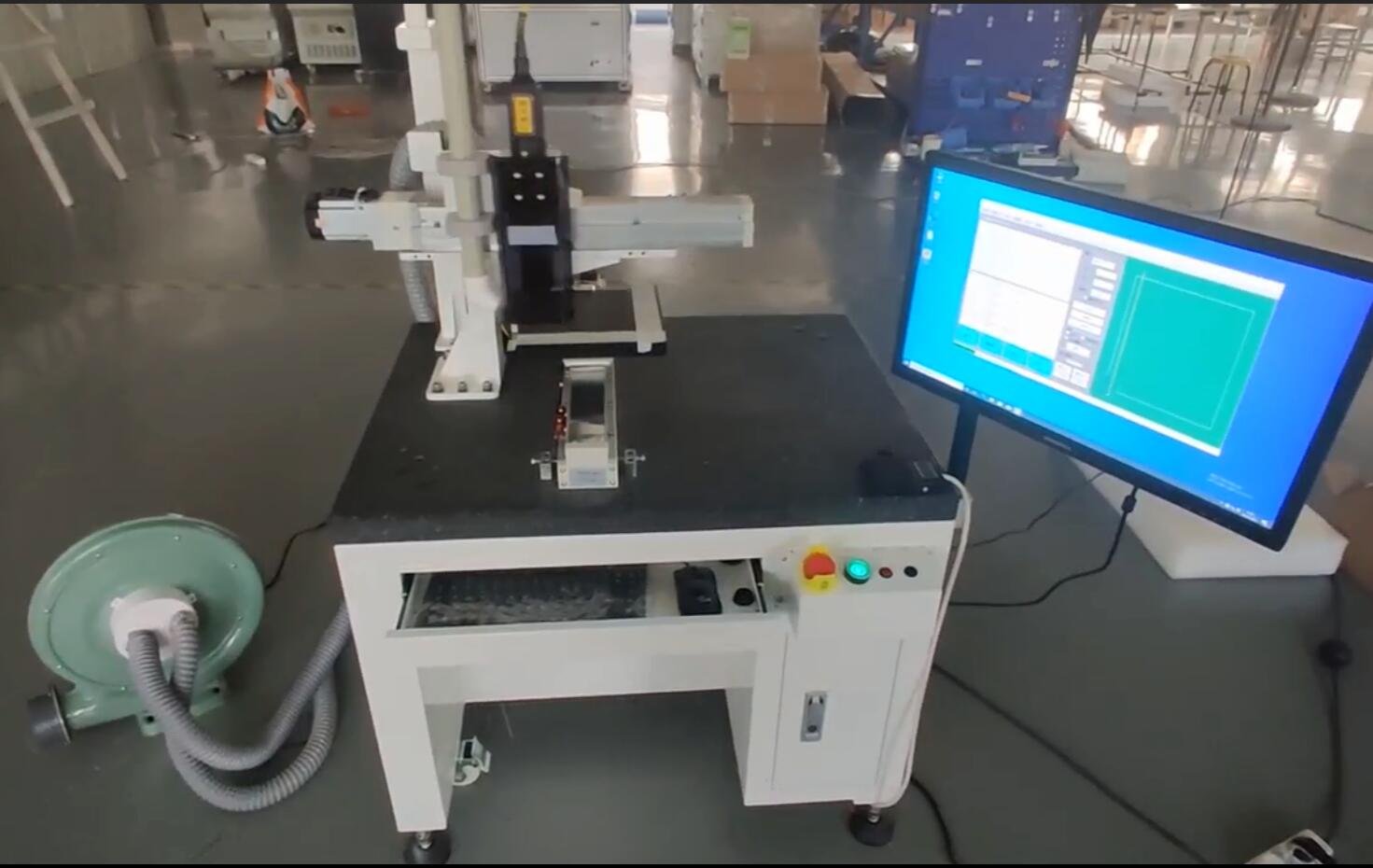
Laser Scribing vs. Traditional Mechanical Cutting Methods
Many manufacturers ask why they should abandon traditional mechanical tools. A structured comparison quickly validates the technological upgrade. It directly addresses common alternative evaluation methods used by factory engineers.
First, we must clarify strict application distinctions. Diamond wire remains the absolute industry standard for ingot-to-wafer slicing. However, laser technology dominates modern cell-to-strip cutting. You need advanced lasers for assembling half-cut and shingled module architectures. Mechanical tools simply fail at this delicate downstream stage.
Lasers offer incredible micron-level kerf widths. Mechanical methods suffer from much wider, friction-based material loss. When you reduce kerf loss, you maximize the usable active area of every solar cell. This leads to higher overall panel wattage.
Edge quality presents another stark difference. Mechanical cutting inherently induces physical stress fractures. These invisible micro-cracks propagate over time due to weather cycling. Laser scribing leaves a clean, highly predictable edge. This smooth edge directly correlates to much higher mechanical strength in the final PV panel.
Operating costs also shift significantly after an upgrade. Lasers eliminate the constant need for costly consumables like diamond wires and abrasive slurries. They do introduce localized power demands and specific optical maintenance costs. However, the continuous operational savings consistently outweigh these new localized expenses.
Evaluation Feature | Laser Scribing Process | Mechanical Cutting Method |
Primary Application Stage | Cell-to-strip (Half-cut/Shingled panels) | Ingot-to-wafer primary slicing |
Kerf Width & Material Loss | Micron-level (Minimal active area loss) | Wider (High friction and silicon loss) |
Edge Quality & Integrity | Clean, smooth, highly predictable | Prone to deep micro-cracks and stress |
Consumables Required | None (Requires electricity and optics) | High (Wires, slurries, industrial coolants) |
Impact on Production Yield and Module Efficiency
Machine functionality translates directly into verifiable operational KPIs. Business outcomes depend heavily on how well the cutting process preserves original cell integrity.
Minimizing the Heat-Affected Zone (HAZ) reduces severe electrical degradation. When you use an advanced beam, you prevent recombination losses at the cell edges. This precision maintains the overall conversion efficiency of the stripped cells. Higher efficiency panels always command premium market prices.
Highly automated factory lines also see dramatic improvements in wafer breakage rates. Upgrading to non-contact scribing lowers scrap volumes significantly. Evidence-based field data shows substantial yield increases in high-throughput environments. You stop losing expensive, processed materials to clumsy mechanical handling.
Compatibility with advanced cell tech dictates your core equipment choices. Temperature-sensitive architectures require distinct handling. HJT and TOPCon cells feature highly delicate surface layers.
Preventing Dopant Diffusion: Excess heat pushes silicon dopants into unwanted areas. This thermal bleed ruins the vital electrical junctions.
Stopping Passivation Damage: High temperatures easily destroy the passivation layers at the cut edge. HJT cells rely heavily on amorphous silicon layers. These layers melt easily under standard thermal stress.
You must deploy ultra-short pulse lasers for these modern cells. The cold ablation technique prevents both dopant diffusion and passivation layer degradation, securing your yield.
Key Evaluation Criteria for a Laser Solar Cell Cutting Machine
Operations and engineering leads need a strict procurement framework. Selecting the right Laser Solar Cell Cutting Machine requires looking far past basic marketing claims.
Laser Source Specifications
You must match the laser wavelength to specific silicon absorption rates. Different coatings react uniquely to different light spectrums.
Infrared (1064nm): The industry standard for typical silicon. It penetrates deeply and quickly.
Green (532nm): Offers better absorption for specific anti-reflective coatings. It reduces subsurface damage.
Ultraviolet (355nm): Excellent for surface-level, cold-like processing. It provides the tightest possible focal spot.
Pulse duration matters equally in your evaluation. Evaluate the operational return of investing in picosecond lasers over standard nanosecond models. Picosecond beams cost more upfront. However, they save delicate advanced cell architectures from absolute thermal ruin.
Throughput and Automation Integration
Look closely at Units Per Hour (UPH) capabilities. High UPH means nothing if the system bottlenecks your line. The machine must sync flawlessly with existing upstream loaders and downstream unloaders. Ask vendors exactly how their PLCs integrate into your existing factory floor network.
Vision and Positioning Accuracy
Screen-printed busbars often feature slight printing variations from batch to batch. A rigid, static alignment system will cut inaccurately. You need dynamic alignment software. It compensates for these microscopic shifts in real-time. This guarantees the scribe line always hits the optimal dead zone between active areas.
Post-Scribe Processing Mechanics
Determine exactly how the system finishes the job. Does the machine include integrated, non-destructive mechanical cleaving? Some older machines treat scribing and cleaving as a two-step standalone process. An integrated, single-machine setup reduces manual handling steps and massively lowers wafer breakage risks.
Implementation Realities, Rollout Risks, and Compliance
Adopting new laser technology introduces distinct rollout risks. You must prepare for specific implementation realities to prevent prolonged factory downtime.
Vaporized silicon creates highly abrasive micro-dust. Robust exhaust extraction systems are absolutely mandatory. Without proper particulate management, toxic dust contaminates your cleanroom environment. It also settles rapidly on the laser optics. This causes severe mechanical wear and immediate beam distortion. Install high-grade fume extractors directly at the active cutting zone.
Thermal management ensures consistent beam quality over time. High-power lasers generate substantial internal heat. You need dedicated industrial chillers and tight environmental controls. They maintain continuous 24/7 beam stability. A fluctuating ambient temperature will shift your optical focal point, ruining thousands of cell edges.
Equipment operators face a steep learning curve. They must learn how to tune specific laser parameters correctly. Changing power output, pulse frequency, and bite rate takes specialized skill. Different batches of silicon wafers behave differently under the beam. Technicians must calibrate settings whenever you switch external wafer suppliers.
Finally, factor in expected maintenance downtime. Optical lenses degrade naturally over time. Protective windows require regular swaps to prevent beam scattering. Routine calibration checks stop drifting mechanical accuracy. Build these specific replacement cycles into your production schedule to avoid surprise production halts.
Conclusion
A highly reliable laser scribing system focuses on much more than raw cutting speed. You must perfectly balance throughput capabilities with premium edge quality. This delicate balance ultimately maximizes your final module wattage and factory profitability.
Avoid over-specifying hardware: Match the laser pulse profile directly to your cell technology roadmap. Standard PERC cells easily tolerate nanosecond lasers. However, next-generation HJT variants demand ultra-short pulse systems.
Plan for facility impacts early: Prepare your cleanroom for rigorous particulate extraction and heavy thermal management before equipment delivery.
Standardize your operator training: Build clear parameter-tuning guidelines to handle incoming wafer variations confidently and safely.
Take concrete action before signing any procurement contracts. Request a proof-of-concept (PoC) sample run from competing vendors. Require them to test your specific factory wafers. Demand detailed edge-quality microscopy and micro-crack analysis reports before you finalize your vendor shortlist.
FAQ
Q: What is the typical lifespan of the laser source in a commercial scribing machine?
A: Commercial solid-state and fiber lasers offer highly reliable longevity. You can typically expect 10,000 to over 20,000 hours of operating life before replacing the core source. However, optical degradation happens much faster. You must routinely clean or replace protective windows and focusing lenses to maintain beam integrity throughout this lifespan.
Q: Can a single machine process both PERC and HJT cells?
A: Hardware versatility depends entirely on the specific laser source. Standard thermal ablation works perfectly for PERC but destroys the delicate amorphous silicon layers of HJT cells. If you want a single machine for both architectures, you must invest in an ultra-short pulse (picosecond) system capable of cold ablation.
Q: How does non-destructive laser cutting (NDLC) differ from standard laser ablation?
A: Standard laser ablation vaporizes material to create a direct physical groove. Non-destructive laser cutting uses thermal stress-cleave methods. The laser rapidly heats the silicon, followed by rapid cooling. This creates a sub-surface stress plane without vaporizing material, yielding virtually zero kerf loss and perfectly smooth edges.
Q: What are the facility requirements for installing a high-throughput laser scriber?
A: You need exceptionally stable electrical power to prevent beam fluctuations. Facilities must provide dedicated cooling water from industrial chillers to manage internal laser heat. Additionally, you need heavy-duty cleanroom air extraction systems. These vacuums capture the abrasive micro-dust generated during silicon vaporization, protecting both operators and delicate optical lenses.


