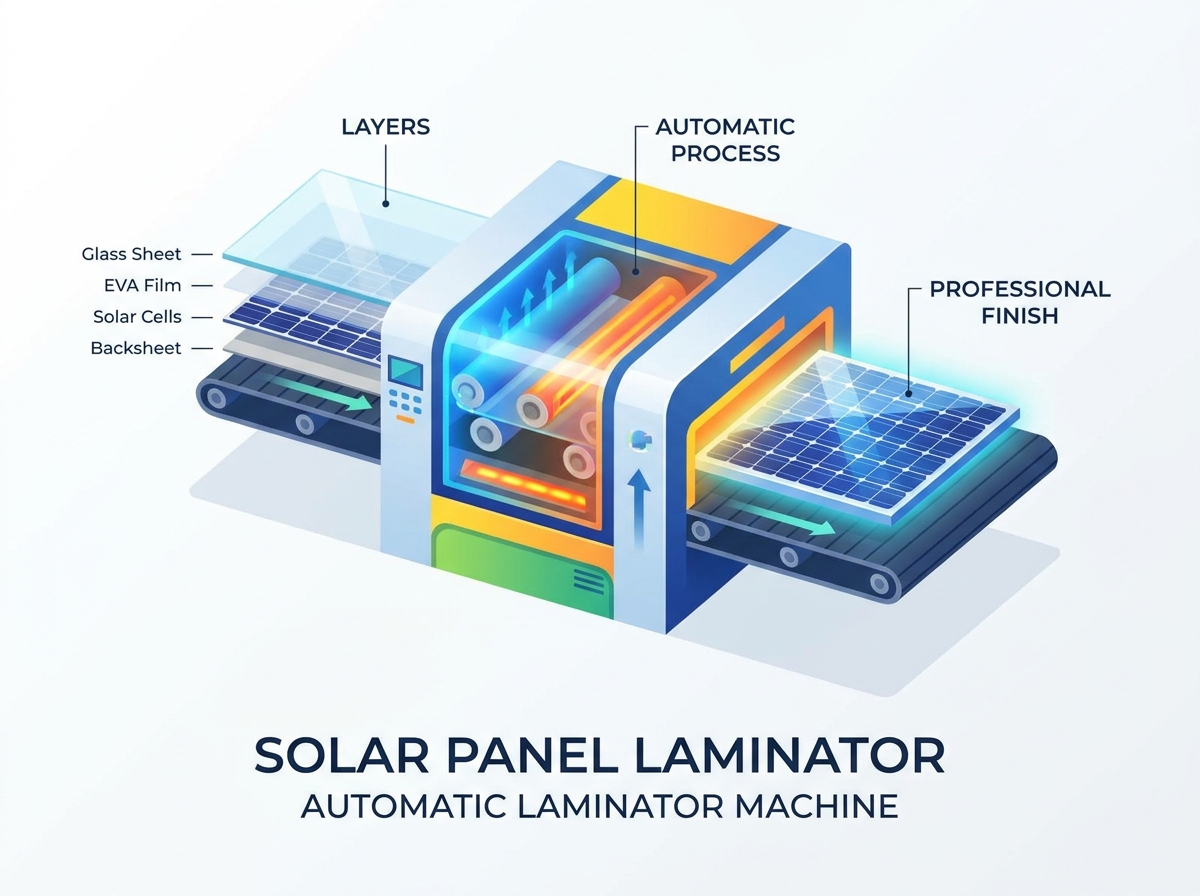
A single microscopic air bubble can completely ruin an otherwise perfect industrial product. In modern manufacturing, the margin for error is virtually nonexistent. Manual encapsulation processes frequently introduce costly defects and unpredictable product failures. Transitioning to automated systems entirely removes these human variables. In high-stakes sectors like solar energy, utilizing a specialized solar panel laminator is no longer just an optional upgrade. It is the ultimate prerequisite for achieving professional-grade, weather-resistant finishes that must endure for decades. This comprehensive guide walks you through the exact steps, parameter settings, and troubleshooting techniques required to operate these sophisticated systems for flawless results every single time.
Key Takeaways
Precision is Key: Industrial lamination equipment provides the exact thermodynamic and vacuum control required for flawless, bubble-free finishes.
Solar Industry Standard: A dedicated solar panel laminator is essential for encapsulating fragile photovoltaic cells, ensuring over 25 years of weather resistance and optimal light transmission.
Step-by-Step Mastery: Achieving a professional finish goes beyond pushing a button. It requires meticulous material preparation, precise parameter setting, and strictly controlled cooling phases.
Defect Prevention: Automated systems drastically reduce common manufacturing flaws like delamination, micro-cracking, and air trapping.
Bottom-Line Impact: Investing in high-quality lamination machinery directly translates to higher product yield, reduced scrap waste, and stronger market competitiveness.
What is an Automatic Laminator Machine and How Does it Work?
At its core, an industrial Automatic Laminator Machine is a highly specialized manufacturing system designed to bond multiple layers of distinct materials together without manual intervention. Basic commercial laminators simply drag materials through heated rollers. Heavy-duty automated systems take a completely different approach. They utilize a complex, synchronized combination of thermodynamic heating, deep vacuum technology, and atmospheric pressure to create an indestructible bond.
The entire operation relies on Programmable Logic Controllers. These PLCs execute precise recipes tailored to different material compositions. By removing human variability from the equation, these machines guarantee that every single product rolling off the assembly line meets strict, repeatable quality control standards. To truly understand how these systems achieve such high-quality finishes, we must examine their core components:
Heating Plates: Provide uniform thermal energy to melt encapsulants like EVA and initiate the chemical cross-linking process.
Vacuum Chambers: Extract all ambient air and moisture from between the material layers to prevent void and bubble formation.
Silicone Diaphragm: Applies even, atmospheric pressure across the entire surface area to press the materials together safely without crushing them.
Cooling Presses: Rapidly stabilize the polymer structure under pressure to prevent warping or thermal shock after the heating phase.
PLC Control System: Manages temperature profiles, vacuum duration, and mechanical movements with absolute digital precision.
These machines are versatile enough for architectural security glass and aerospace composites. However, their most critical and demanding application today remains in photovoltaic module manufacturing.
Why Professional Quality Finishes Matter in Industrial Manufacturing
In the realm of industrial production, the definition of a finish extends far beyond mere aesthetics. For everyday consumer goods, lamination might simply provide a glossy look or a premium tactile feel. For industrial goods, the lamination process is fundamentally about survival, structural integrity, and functional longevity.
Looking at the broader manufacturing landscape, recent data reveals a massive shift toward smart automation within the renewable energy sector. Driven by global demands for higher photovoltaic efficiency, modern facilities are moving away from legacy systems and embracing AI-integrated lamination processes. Today's equipment utilizes real-time data analytics to continuously optimize curing cycles. The result is drastically reduced energy consumption and the virtual elimination of microscopic defects. This evolution proves that a professional finish is a highly engineered structural requirement.
This distinction is most evident within the solar energy sector. A solar module does not require a professional finish just to look appealing on a residential rooftop. It requires it to function safely in harsh, unforgiving outdoor environments. The lamination process permanently seals highly fragile silicon photovoltaic cells between a protective tempered glass cover and a durable polymer backsheet. Ethylene Vinyl Acetate is typically utilized as the primary encapsulant.
If the lamination finish is anything less than professional, the consequences are severe. Moisture ingress can lead to Potential Induced Degradation. This causes the solar panel to lose its power output rapidly. UV exposure can cause poorly cured encapsulants to yellow over time, blocking sunlight and plummeting efficiency. The financial impact of such poor lamination is substantial. Low-quality processes inevitably result in high scrap rates, expensive factory rework, and disastrous warranty claims that can destroy a manufacturer's brand reputation overnight.
The Role of a Solar Panel Laminator in Flawless Production
Standard lamination equipment is entirely insufficient for producing photovoltaic modules. The brittle nature of silicon cells combined with stringent weatherproofing requirements necessitates the use of a specialized solar panel laminator. If standard methods were applied to a solar module, the immediate physical pressure would trap pockets of air inside the matrix long before the encapsulant could melt and fill the microscopic gaps.
A solar panel laminator solves this critical problem through a unique, multi-stage process known as Vacuum-Heat Synergy. This process is divided into distinct, carefully timed phases.
First is the Evacuation Phase. As the machine's lower and upper chambers close, heavy-duty rotary vane pumps engage. You can hear the deep hum of the pumps as they pull a profound vacuum, often down to 100 Pascals or less. This forcibly extracts all oxygen and ambient moisture from the module stack before any significant physical pressure is applied.
Next comes the Pressing and Heating Phase. Once the vacuum has completely removed the air, the upper chamber is vented to the atmosphere. This differential causes the internal silicone diaphragm to inflate downward, applying gentle, perfectly uniform atmospheric pressure across the glass. Simultaneously, the heating plates raise the temperature of the EVA to its melting and curing point. The heat triggers a chemical reaction called cross-linking, transforming the EVA from a meltable thermoplastic into a permanent thermoset material. Without this specialized vacuum-first approach, achieving a professional-grade solar panel would be physically impossible.
Step-by-Step: How to Use an Automatic Laminator Machine
Operating an advanced automatic laminator machine requires strict adherence to standard operating procedures. Achieving a flawless finish is a highly scientific process that demands meticulous preparation and precise execution.
Step 1: Preparation and Material Alignment
A perfect finish begins long before the machine is even powered on. Picture the factory floor: a microscopic speck of dust or a stray lint fiber settles on the glass. If ignored, that tiny contaminant will transform into a glaring visual defect or a structural micro-void once sealed. Operators must carefully stack the materials into what the industry calls the sandwich. For a standard solar module, this stack consists of tempered front glass, an EVA film, the interconnected solar cell matrix, a second EVA film, and finally, the protective backsheet. Automated loading belts then transport this stack into the laminator to ensure exact alignment.
Step 2: Programming the PLC Parameters
The brain of the operation lies in the Human-Machine Interface connected to the PLC. Operators must input the exact thermodynamic parameters based on the specific encapsulant being used. For standard fast-cure EVA, the processing temperature is typically set between 140°C and 150°C to reach the activation threshold for chemical cross-linking. The evacuation time is usually set for 4 to 6 minutes to guarantee total air removal. This is followed by a pressing and curing time of 10 to 14 minutes to ensure the EVA achieves an optimal gel content.
Step 3: The Curing and Pressing Cycle
Once the parameters are locked in and the cycle initiates, the machine takes complete control. The system automatically transitions from the deep vacuum stage to the pressure stage. The silicone diaphragm descends, ensuring that the weight and pressure are distributed evenly across the entire surface area of the module. This hydrostatic-like distribution is exactly what prevents the brittle silicon cells from shattering under the physical load.
Step 4: The Cooling Process
The final step is often the most overlooked, yet it is vital for locking in a professional finish. When the module exits the heating chamber, the materials are still somewhat soft. If the module cools too rapidly in ambient air, the differing thermal expansion coefficients of the glass and plastic will cause the panel to warp. Automated systems utilize a dedicated cooling press that applies a chilled plate to the module while maintaining physical pressure. This halts the cross-linking process at the perfect moment and ensures the final product remains perfectly flat.
Common Lamination Defects and How Automatic Systems Prevent Them
Even with high-end raw materials, manual or poorly calibrated lamination processes are plagued by defects. Automated systems are engineered specifically to eradicate these common flaws through empirical precision.
Defect Type
Manual Process Vulnerability
Automated System Solution
Micro-Bubbles
Inconsistent roller pressure traps ambient air before adhesive melts.
Deep vacuum extraction down to 100 Pa before any pressure is applied.
Delamination
Uneven heating causes localized cold spots and weak chemical bonding.
PID controllers ensure ±1.5°C temperature uniformity across the platen.
Bubbles occur when air is not fully evacuated before the adhesive begins to melt and seal the edges. They also form when moisture in the materials vaporizes under high heat. The deep vacuum chambers in automated systems pull a sustained vacuum that eradicates air completely. By holding this vacuum while the temperature slowly ramps up, the machine ensures that any off-gassing from the polymers is instantly extracted before the pressing phase can trap it inside.
Delamination and Peeling
Delamination happens when the encapsulant fails to bond properly with the glass or backsheet. This is almost always caused by inconsistent heating or incorrect curing times, resulting in a low gel content. Modern automated machines utilize advanced PID temperature controllers combined with circulating thermal oil. This ensures that heat distribution across a massive platen is uniform. It eliminates cold spots and guarantees that every square inch of the material achieves the correct chemical bond.
Cell Shifting or Micro-cracks
Applying uneven mechanical pressure or applying pressure too quickly will cause the solar cells to shift out of alignment. It can also develop microscopic fractures that destroy electrical output. The automated silicone diaphragm acts as a flexible, adaptive cushion. Instead of a rigid metal plate pressing down, the diaphragm inflates using atmospheric pressure. It contours gently around the cells and applies perfectly uniform pressure that safely encapsulates without crushing.
Key Features to Look for When Upgrading Your Equipment
For manufacturing facilities looking to scale production or improve yield rates, upgrading legacy equipment is a critical strategic decision. Procurement managers evaluating a new industrial automatic laminator machine should focus on specific engineering features that directly impact the bottom line.
Multi-Chamber Designs: Traditional single-chamber machines must heat, cure, and cool the module in one location, creating a production bottleneck. Advanced double or triple-chamber solar panel laminators allow one module to be in the heating phase while another is simultaneously in the curing phase. This effectively doubles factory throughput.
Advanced Temperature Uniformity: The quality of the EVA cross-linking is entirely dependent on thermal consistency. Buyers should demand machines that guarantee a temperature variance of less than ±1.5°C across the entire heating plate. This is the exact standard maintained by industry leaders like Zenith Solar Machinery.
High-Quality Silicone Diaphragms: The diaphragm is the primary consumable part of the machine. Look for equipment that utilizes high-tear-strength, durable silicone diaphragms. This ensures consistent pressing cycles and drastically reduces maintenance downtime.
User-Friendly HMI: An intuitive touchscreen interface with extensive recipe-saving capabilities allows operators to switch between different encapsulants instantly. This reduces setup time and minimizes the risk of manual data entry errors.
Maintenance Tips for Long-Lasting Equipment
Achieving a professional quality finish requires a rigorous and systematic approach to ongoing maintenance. Industrial environments expose machinery to continuous thermal stress, mechanical friction, and chemical off-gassing. Without a proper preventative maintenance schedule, even the most robust equipment will eventually suffer from performance degradation.
Daily maintenance focuses primarily on cleanliness. The heating platens must be meticulously cleaned at the start and end of every shift to remove any residual encapsulant. Leftover debris creates uneven thermal transfer points. Additionally, PTFE sheets must be inspected daily for creases or tears to prevent adhesive from leaking onto the machine's core components.
The vacuum system is arguably the most critical component for preventing air bubbles. Weekly checks should include monitoring the vacuum pump oil levels. Inspect the oil for cloudy discoloration, which indicates moisture contamination. Operators must perform a weekly vacuum leak test to ensure the silicone diaphragm has not developed microscopic pinholes. Monthly calibration of temperature sensors using external thermal mapping tools is also essential to maintain uniform heat.
Maintenance is not strictly physical. Digital upkeep is equally important. Facility engineers should establish a routine for backing up existing lamination recipes and installing PLC firmware updates. Strict adherence to this comprehensive maintenance program directly influences your return on investment. A meticulously maintained machine operates with predictable reliability and ensures that every finished product meets strict industry standards.
FAQ
Q: What is the main advantage of an automatic laminator machine over a manual one?
A: The primary advantage lies in the complete elimination of human error and the introduction of absolute consistency. Manual lamination relies on an operator's judgment for pressure application and timing, which naturally leads to variances. An automatic system utilizes programmable logic controllers to execute exact parameters for heat, vacuum depth, and pressing force. This is essential for achieving bubble-free finishes at an industrial scale.
Q: How does a solar panel laminator differ from a standard commercial laminator?
A: A solar panel laminator is highly specialized industrial equipment engineered specifically for the encapsulation of fragile photovoltaic cells. Standard laminators merely apply heat and pressure through rollers. A solar laminator features a robust vacuum chamber. It must pull a deep vacuum to extract all oxygen and moisture before applying heat, ensuring a waterproof bond engineered to last for decades.
Q: What temperature should a solar panel laminator be set to?
A: The exact temperature setting is dictated by the specific chemical properties of the encapsulant material being used. For standard Ethylene Vinyl Acetate, the curing temperature typically ranges between 140°C and 150°C. The machine must maintain this temperature uniformly across the entire heating platen to achieve the correct cross-linking density.
Q: How do I prevent bubbles and air pockets during the lamination process?
A: Preventing bubbles requires meticulous material preparation and precise machine settings. Ensure all materials are completely free of dust and moisture. Program your automatic equipment to execute a sufficiently long vacuum pumping stage. The machine must pull a full vacuum to evacuate total air from the material stack before the heating plates reach the melting point of the adhesive.
Q: Can automatic lamination machines handle different sizes and thicknesses of materials?
A: Yes, industrial-grade automatic laminators are highly versatile. They feature large, flat heating platens that can accommodate various dimensions. The PLC systems allow operators to save multiple recipes. When switching to a product with a different thickness, the operator simply selects the corresponding recipe on the touchscreen, and the machine automatically adjusts the parameters.
Q: How long does the solar panel lamination process take?
A: The total cycle time depends heavily on the type of encapsulant and the machine's configuration. A standard cycle using fast-cure EVA typically takes between 15 to 20 minutes per batch. This includes 4 to 6 minutes for vacuum evacuation, followed by 10 to 14 minutes for heating and pressing. Multi-chamber systems can overlap these processes, significantly reducing the effective cycle time per module.
Q: What is the difference between single-chamber and multi-chamber laminators?
A: A single-chamber laminator performs the entire vacuum, heating, and pressing cycle in one physical space, meaning the next batch cannot enter until the current one is finished. A multi-chamber laminator separates these stages into different sections. While one module is being pressed and cured in the second chamber, a new module can simultaneously undergo the vacuum phase in the first chamber, drastically increasing production capacity.
Elevate Your Production Line
Achieving a professional-quality finish is a strict science. By removing human error and introducing absolute control over thermodynamic and atmospheric variables, today's technology ensures reliable, repeatable results. Whether you are scaling up general manufacturing or producing high-efficiency photovoltaic modules, advanced automation is a non-negotiable asset. Ready to eliminate production bottlenecks and achieve flawless encapsulation? Upgrading your production line requires reliable, high-precision equipment. Explore the full range of solutions at Zenith Solar Machinery to find the exact full automatic laminator machine tailored to your manufacturing needs.